
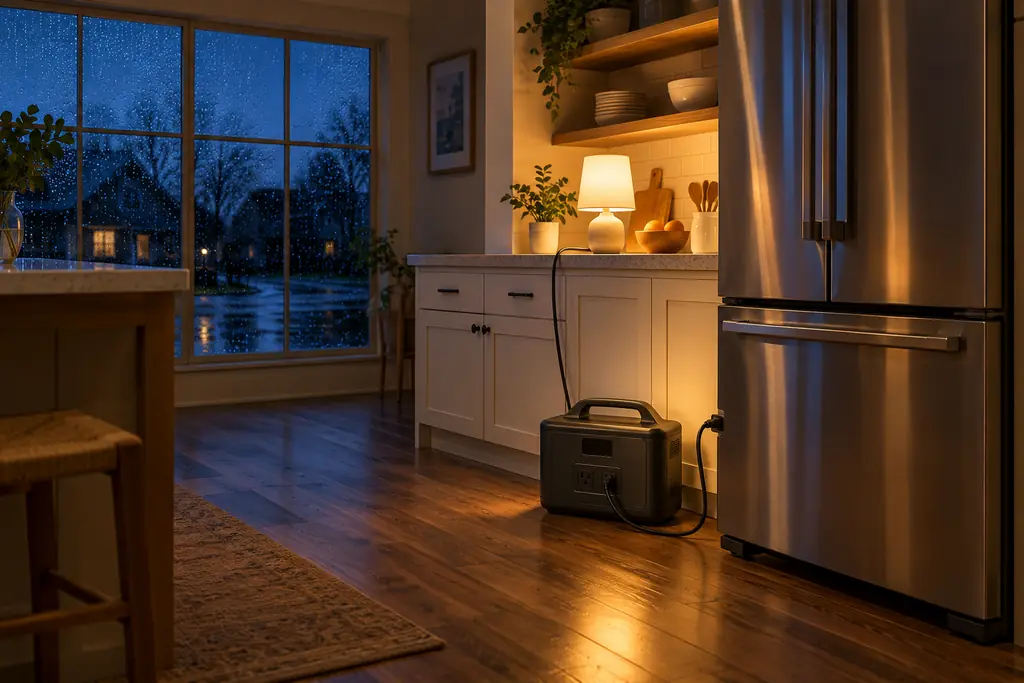
Will it run my fridge?
Hours on every model in the database for a full-size fridge, and how to keep food safe while you wait.
Home backup power, explained with data
Tell us what has to keep running in an outage and for how long. We show which portable power stations cover it, how long each one lasts, and where every number came from.
Power station finder
Describe your home in a sentence, or pick a starting point and adjust it. The models that fit update as you go, with how long each one would last.
Quickest way
Your plan
Pick a starting point to see matching power stations.
Assumes 80 to 90% of rated battery capacity reaches your appliances. No solar or recharging counted. How we calculate
Four common home backup questions, answered with published specs and calculations you can check.
Hours on every model in the database for a full-size fridge, and how to keep food safe while you wait.
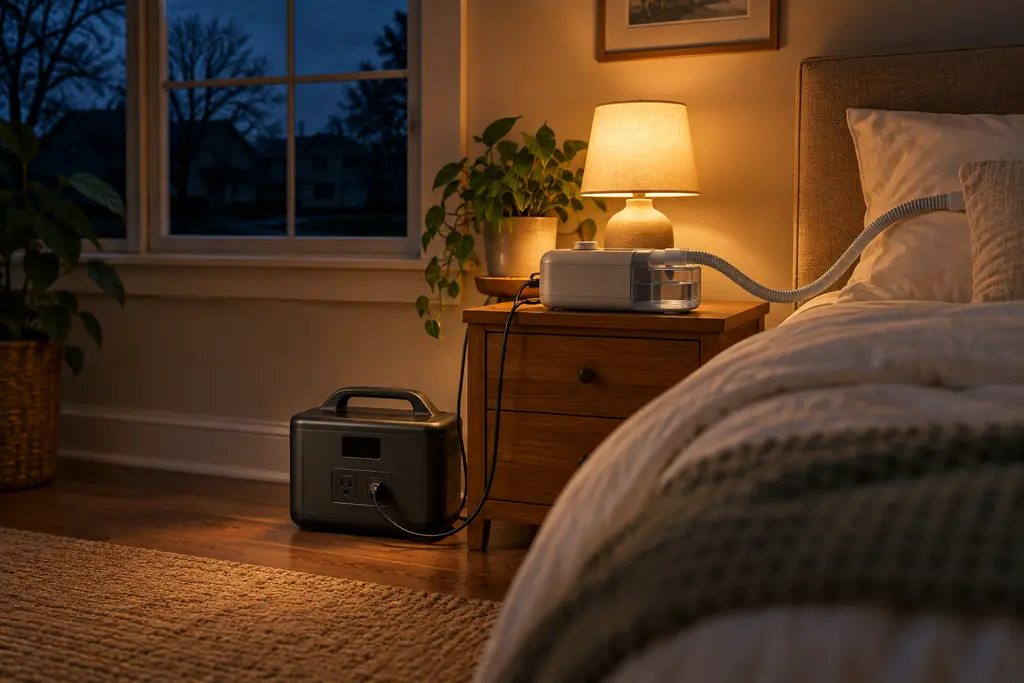
Picks sized for a full night or several, with and without a heated humidifier.

Noise, fuel, indoor carbon monoxide risk and long outages, side by side.
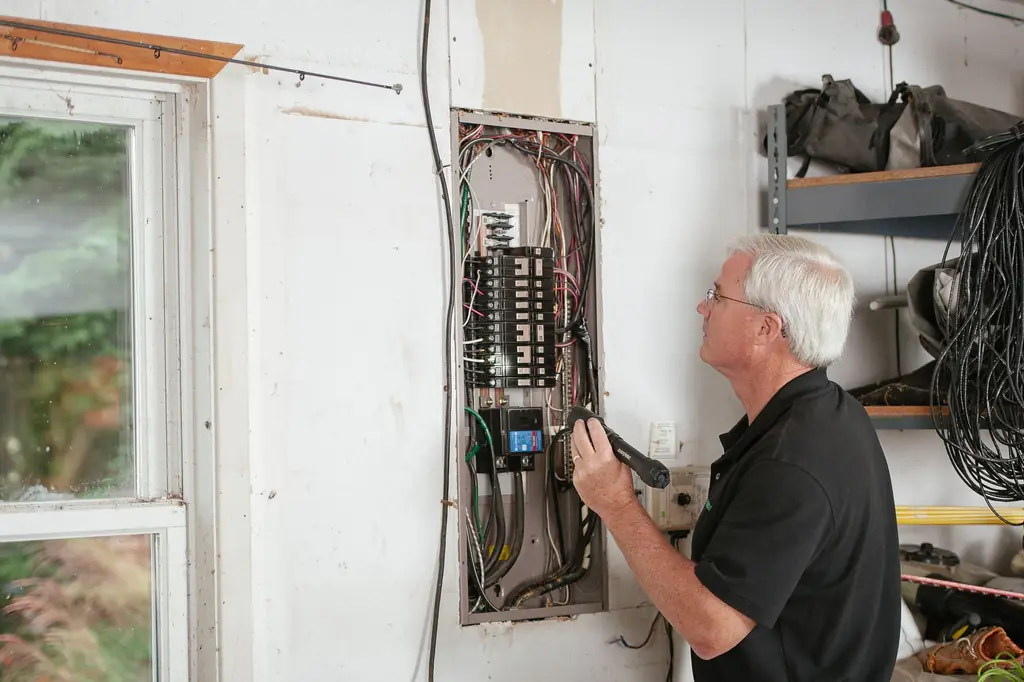
When appliances can plug straight in and when circuits need transfer equipment from a licensed electrician.
The decision path from your list of appliances to the right size and model.

Furnace blowers, safe heat and charging a station in the cold.

Capacity, 240 V output and the most solar input each model accepts, which is not daily production.
Explainers on the specs, the habits and the questions that come before buying.
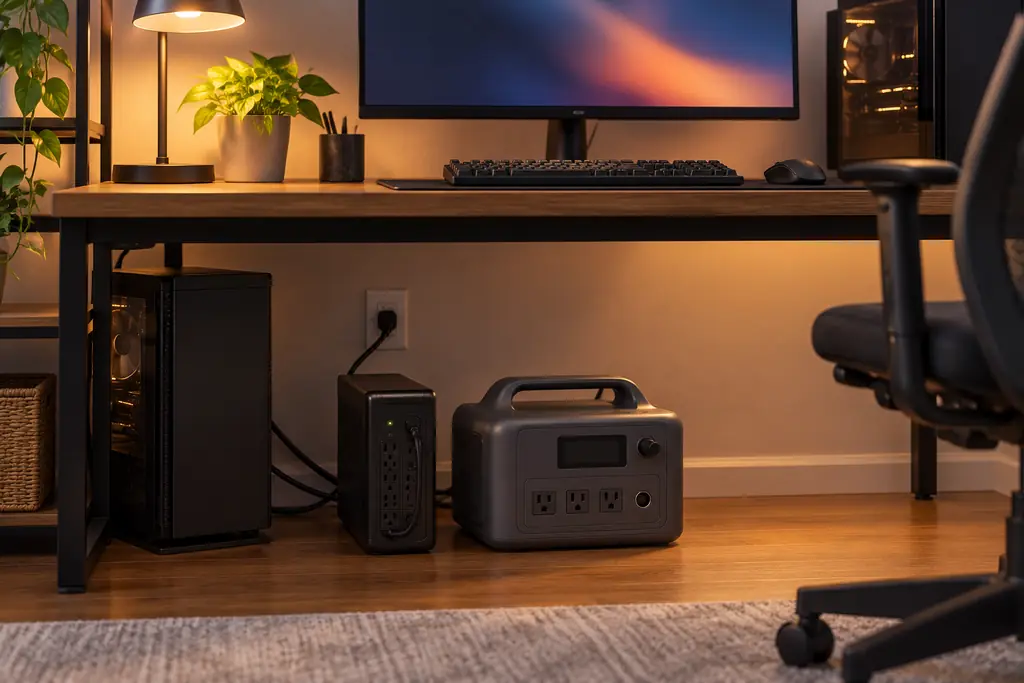
Most power stations switch to battery in 10 to 30 ms, not instantly. What UPS, EPS and pass-through mean, what a 10 ms claim promises, and how to test yours.
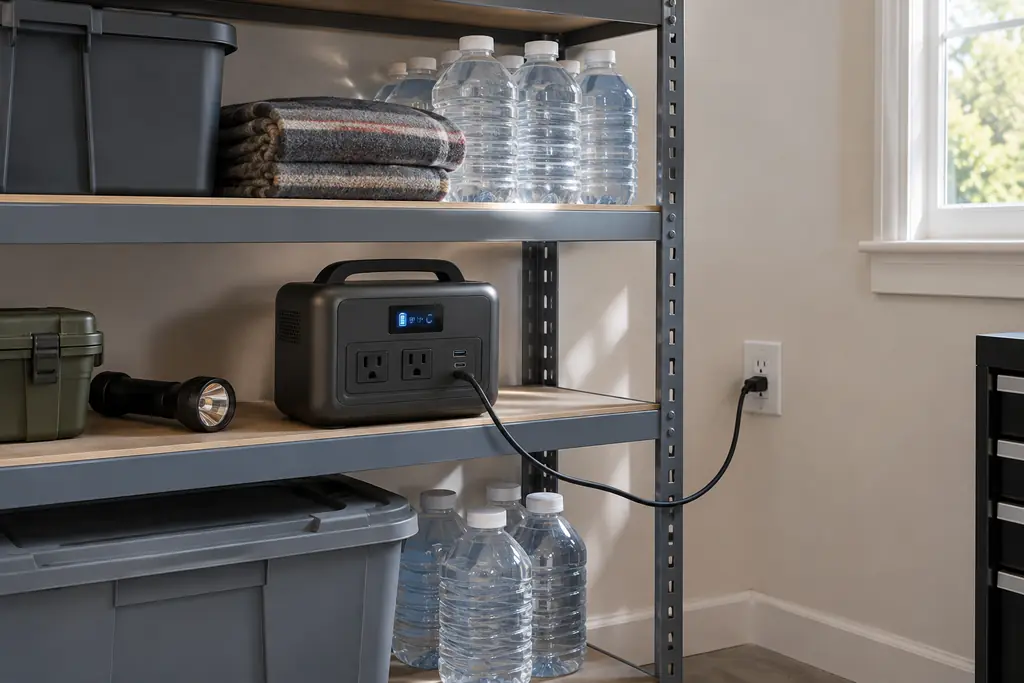
EcoFlow, Jackery, Anker, BLUETTI and DJI each give different advice on staying plugged in, storage charge and top-ups. What each manual says, model by model.

Grid-tied solar must stop feeding the grid within 2 seconds of an outage, even in full sun. Why, which systems still give daytime power and what a battery adds.
Ranges assume 80 to 90% of rated capacity reaches the appliance. Check another model
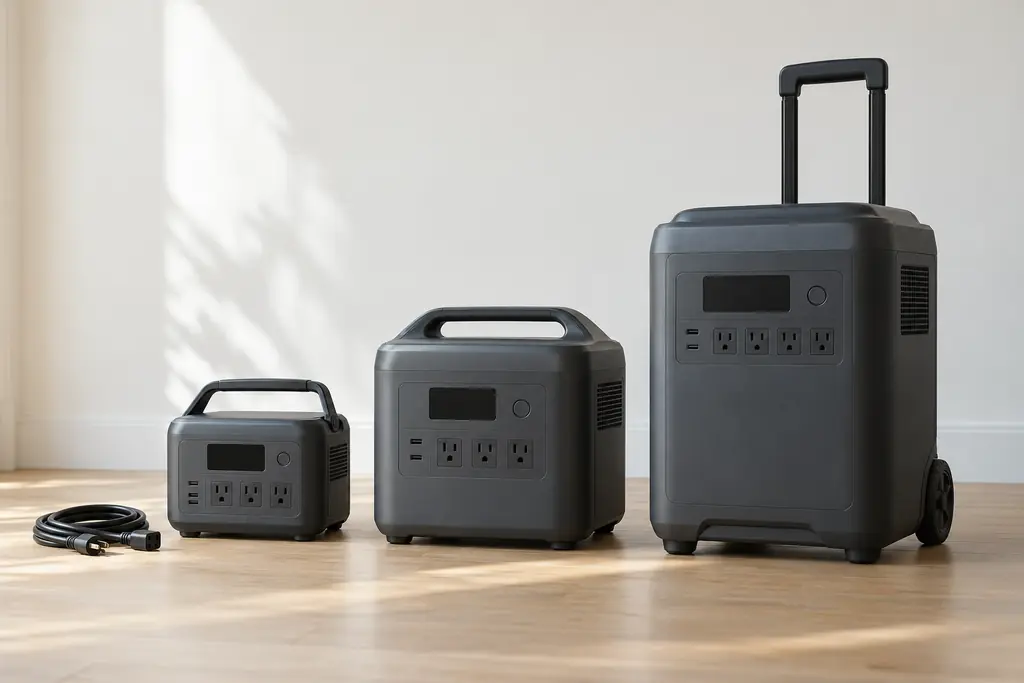
Capacity, output, surge, 240 V and solar input for every model, side by side. Filter it, compare up to three, and open any model to see the source behind each number.
We do not run a test lab. We read the US manual and spec page for each model, record each figure with its link and the date we checked it, and mark gaps as "not stated". When we use a published test from another outlet, we credit it by name and link to it. Calculators show their maths.